Greece Has Become a "Café Economy," LSE Study Finds - GreekReporter.com

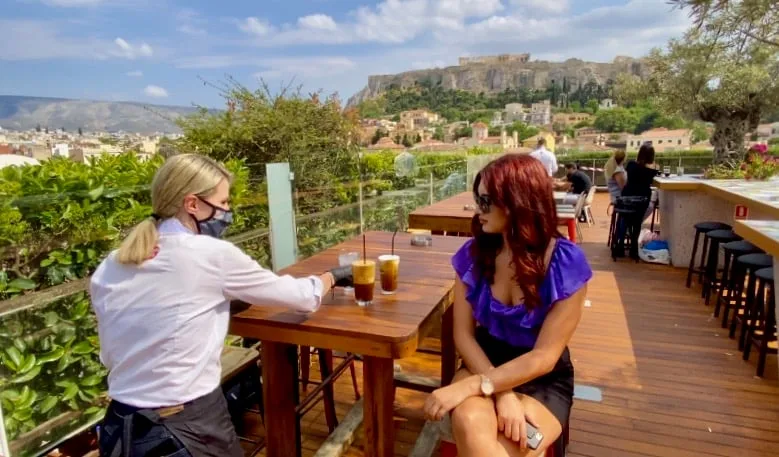
Greece Has Become a Cafe Economy, LSE Study Finds
A new study from the London School of Economics explores the transformation of Greece into what researchers call a cafe economy. The report, authored by Michalis Nikiforos, Vlassis Missos, Christos Perros, and Nikolaos Rodousakis, details the massive growth of the Accommodation and Food Service Activities (AFSA) sector. This industry includes a wide range of tourism-related businesses, such as hotels, restaurants, bars, entertainment venues, and short-term rentals.
The authors use this label to highlight a significant but frequently overlooked issue: despite official claims of a fresh developmental strategy, the Greek economy remains stuck in a pattern established over the last fifteen years that rests on feet of clay. The researchers analyzed how tourism-related activities expanded at a disproportionate rate compared to other industries following years of austerity and structural reforms. These reforms were originally intended to liberalize the product and labor markets to stimulate growth.
THE Decline of Labor Productivity
Instead of the productivity gains promised by bailout-era reforms, the Greek economy experienced a sharp downturn in labor productivity. The study identifies a reduction in aggregate demand and a significant drop in real wages as the primary drivers of this collapse. The authors describe this shift as a violent redistribution of income away from the labor force.
The movement of employment toward the AFSA sector is responsible for approximately one-third of the total decline in labor productivity across the nation. While the tourism sector grew, more productive industries like manufacturing lost hundreds of thousands of jobs. Furthermore, the researchers point to a persistent shortfall in employment related to high-tech sectors and innovation.
A Dual Development Model Emerges
The study explains that Greece is currently regressing into a dual development model, a structure typically associated with less developed or transition economies. In this framework, economic growth relies on low-productivity sectors that absorb unemployment by utilizing cheap labor made possible through wage compression. The researchers conclude that the three bailouts implemented between 2010 and 2018 failed to improve competitiveness and instead triggered a deep recession.
The report also notes that even the International Monetary Fund issued an apology for underestimating the negative consequences of sharp fiscal contraction. Today, the AFSA sector stands as the largest employer in Greece, yet it is characterized by low wages and an increase in precarious or part-time work. This has created a situation where the workforce is increasingly overqualified; Eurostat data shows that over 86 percent of young graduates working in the tourism and hospitality sector hold jobs that are below their actual qualifications.
Tourism Impact on Trade Surplus
Despite these structural challenges, the tourism industry has provided a necessary boost to the current account balance. Between 2009 and 2023, the trade surplus in travel services improved by five percentage points. This improvement accounted for roughly half of the total reduction in the Greek current account deficit during that same period.
However, the researchers warn that an over-reliance on a low-wage, labor-intensive service economy creates long-term risks. They argue that low wages reduce the incentive for businesses to pursue innovation or technological progress. Ultimately, this trend undermines the overall competitiveness of the Greek economy and leaves it vulnerable to future shifts in the global market.
Source: greekreporter.com · 2026-10-11